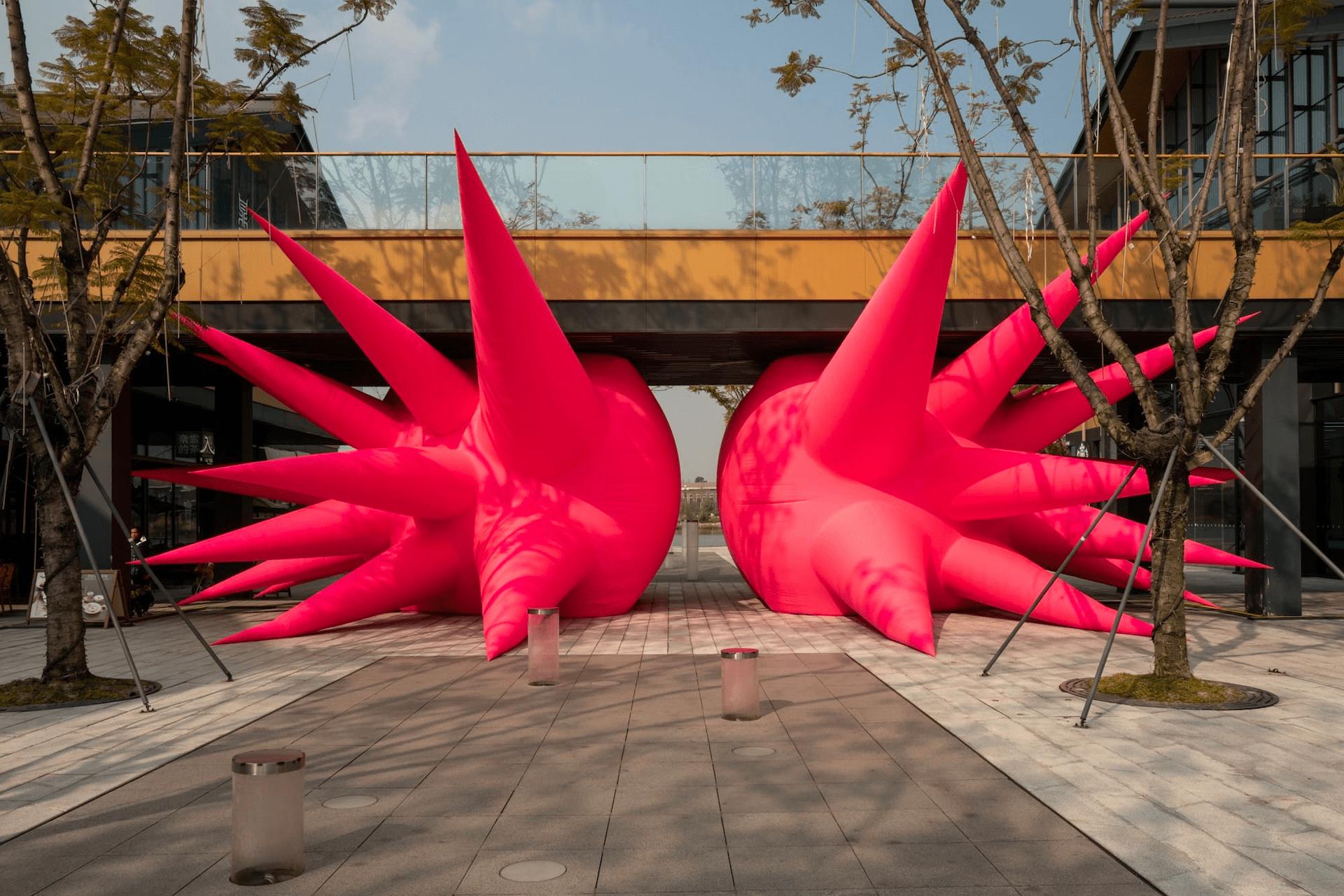
Large-scale inflatable installations captivate audiences with their dramatic scale, vibrant forms, and seemingly effortless presence. From towering art sculptures and temporary event spaces to protective domes and architectural wonders, these structures demonstrate remarkable ingenuity. What appears as simple air-filled shapes relies on sophisticated engineering principles that balance flexibility, strength, and safety. Companies like Megaflatables specialise in turning ambitious concepts into reality through precision design and fabrication.
Inflatable technology has evolved far beyond novelty balloons. Modern installations draw on decades of advancements in materials science, structural analysis, and environmental engineering. They offer unique advantages: rapid deployment, lightweight transport, and the ability to create expansive, column-free spaces that traditional construction cannot easily match.
Materials: The Foundation of Strength and Flexibility
At the heart of every successful large inflatable lies its fabric. Engineers typically select high-performance coated textiles, such as PVC-coated polyester or specialised nylons with polyurethane (PU) layers. These materials combine a strong woven base for tensile strength with airtight coatings that maintain internal pressure.
Polyester fabrics provide excellent dimensional stability and resistance to stretching under load, while PVC coatings deliver durability against UV radiation, weathering, and abrasion. For more demanding applications, materials like Vectran or ripstop nylon with enhanced barriers offer superior performance. Weights range from 550gsm to over 1800gsm, depending on the structure’s size and intended lifespan.
Seaming techniques are critical. High-frequency welding creates strong, airtight joints superior to traditional stitching for permanent or semi-permanent installations. Engineers must calculate seam strength meticulously, applying safety factors to account for stress concentrations and long-term fatigue.
Structural Design Principles
Inflatable structures operate on the principle of internal air pressure counteracting external forces. This creates tension in the membrane, giving the installation rigidity. There are two main types: continuous airflow systems, which use fans to maintain pressure, and sealed high-pressure systems, which hold air like a tyre.
Design begins with detailed 3D modelling. Engineers simulate how the fabric will behave under various loads using finite element analysis (FEA). They account for wind, snow, internal pressure differentials, and even dynamic forces from crowds or environmental changes. Safety factors are essential—often 4 or higher for human-rated structures—to ensure reliability under worst-case scenarios.
Anchoring and foundation systems receive equal attention. Ground stakes, ballast weights, or tension cables secure the structure against uplift. For very large installations, such as sports domes or tunnel plugs, compartmentalised designs or hybrid air-beam systems provide redundancy. If one section loses pressure, the overall integrity remains intact.
Inflation and Control Systems
The “heart” of an inflatable is its mechanical system. Powerful centrifugal or axial blowers deliver consistent airflow, often with backup units for reliability. Sophisticated sensors monitor internal pressure, temperature, and external conditions, automatically adjusting output to maintain stability.
In emergency applications, like flood-protection tunnel plugs, rapid deployment is key. Systems must inflate within minutes using remote controls, then withstand significant water pressure. Testing involves hundreds of cycles to validate folding patterns, deployment sequences, and sealing performance.
For artistic or event installations, quieter, energy-efficient systems allow seamless integration into public spaces. LED lighting and interactive elements can be embedded without compromising structural performance.
Real-World Applications and Challenges
Large inflatables appear in diverse contexts. Artists like Steve Messam create monumental sculptures that reinterpret architecture, filling historic arches or urban voids with billowing forms that invite interaction. In construction, giant domes cover sites to control dust and noise. Emergency shelters and event pavilions benefit from quick setup and minimal material use.
Challenges include managing environmental loads and ensuring longevity. UV degradation, punctures, and fatigue require robust maintenance protocols. Engineers conduct extensive material testing for tensile strength, tear resistance, and permeability. Fire-retardant treatments and compliance with building codes are non-negotiable for public installations.
Sustainability is an emerging focus. Recyclable fabrics, energy-efficient blowers, and modular designs that extend service life reduce environmental impact. Some structures now incorporate solar-powered systems or biodegradable elements for temporary uses.
The Future of Inflatable Engineering
Advances in computational design, smart materials, and automation are pushing boundaries further. Adaptive structures that respond to environmental changes, self-healing membranes, and integration with digital twins for real-time monitoring represent exciting frontiers.
As cities seek flexible, low-impact solutions for events, disaster response, and cultural experiences, large-scale inflatables offer an elegant answer. They embody a philosophy of doing more with less lightweight yet strong, temporary yet transformative.
The engineering behind these installations is a masterclass in interdisciplinary collaboration. Material scientists, structural engineers, fabricators, and artists work together to balance creativity with technical precision. Whether creating a breathtaking public artwork or a functional protective barrier, the result is always impressive: structures that seem to defy gravity while resting firmly on sound scientific principles.
In an era demanding agility and innovation in built environments, inflatable technology continues to inflate our expectations of what architecture and art can achieve. The next generation of installations will likely be even more ambitious, sustainable, and seamlessly integrated into our world, proof that sometimes the most advanced engineering feels as light as air.